July 22, 2025

Auschwitz Denial in Poland: Nationalist Extremism vs. Historical Truth
Date: July 2025
Polish society has once again been ripped open and forced to face its historical humanity and moral memory. A nationalist extremist leader denies gas chambers existence forcing a strong institutional defense of historical memory. “His brief radio remark—‘Auschwitz’s gas chambers are a fake’—struck with surprising force. Delivered by far-right MEP Grzegorz Michał Braun, it triggered a criminal investigation under Poland’s Holocaust denial law and plunged the nation into turmoil.” ABC NEWS
Grzegorz Braun (born March 11, 1967 in Toruń) is a veteran far-right politician, documentary filmmaker, who champions his Catholic values alongside his antisemitic beliefs. He has served in Poland’s Sejm, the lower house of Poland’s bicameral parliament (2019‑2024) and was elected as a Member of the European Parliament (MEP) in July 2024, representing Lesser Poland and Świętokrzyskie for his nationalist party, the Confederation of the Polish Crown AP NEWS
Braun has a well-documented history of provocative, antisemitic actions:
- In December 2023, he extinguished Hanukkah candles in Parliament using a fire extinguisher. AP NEWS
- He has repeatedly disrupted Holocaust lectures, invoked medieval blood libel tropes, and led campaigns against immigration and LGBTQ rights.
- In the May 2025 presidential election, he earned over 6% of the vote—demonstrating a significant far-right base ABC NEWS.
It is important to understand what happened and why.
On July 10, 2025, Braun appeared on Radio Wnet, where he declared that “Auschwitz’s gas chambers are a fake”, accusing the Auschwitz‑Birkenau Museum of pushing a “pseudo-historical narrative” and adding that “ritual murder is a fact”—explicitly reviving antisemitic blood‑libel claims. tvpworld.com
His statements came just as Poland grapples with demographic anxiety—the lowest birth rate in Europe—and growing xenophobia. Analysts say Braun made these remarks to reinforce his nationalist credentials, amplify conspiracy narratives, and gain political traction.
What is the Political & Social aftershocks cause by his statement.
Prosecutors in Kraków launched a preliminary investigation under Article 55 of the Institute of National Remembrance Act, which criminalizes Holocaust denial and carries penalties of up to three years in prison Politico
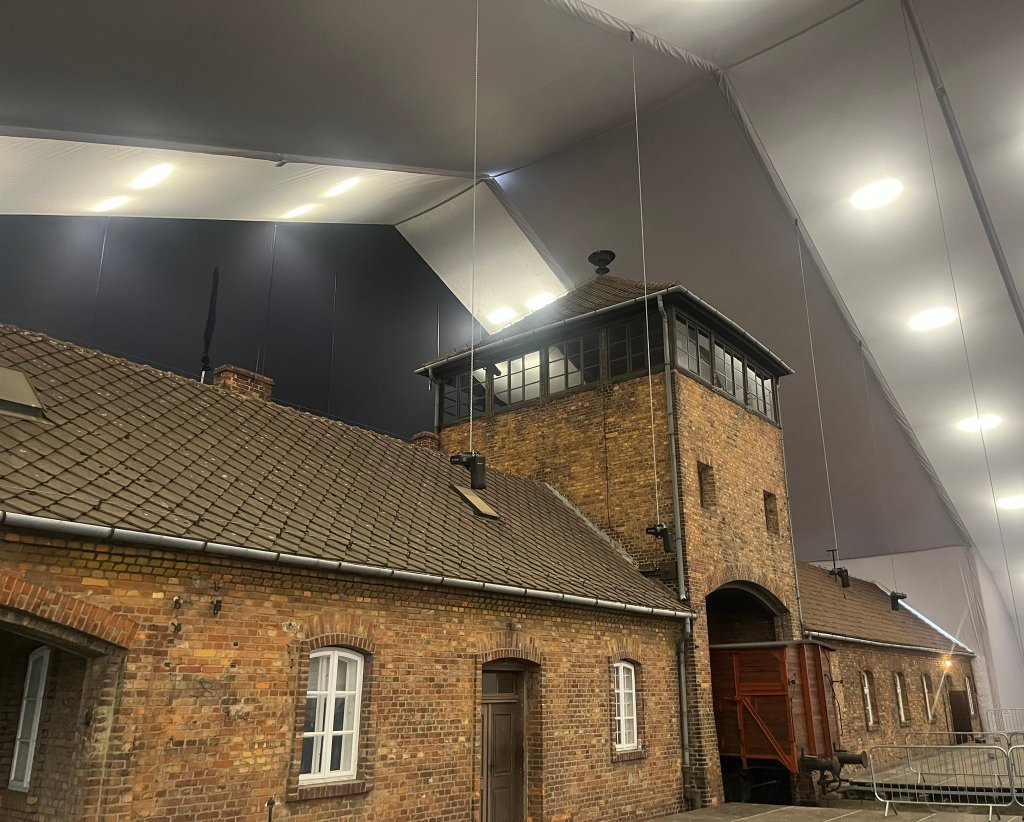
The director of the Auschwitz museum, Piotr Cywinski, said he would file a separate complaint with prosecutors. He said that “denying the fact that gas chambers existed is not only a manifestation of anti-Semitism and an ideology of hatred; in Poland it is also a crime.” AP NEWS
Political response
Prime Minister Donald Tusk condemned Braun’s remarks as “a disgrace,” affirming that Poland must not be tied to extremist revisionism AP News.
Both the U.S. and Israeli embassies in Warsaw issued statements denouncing the comments and warning they threaten minority safety and national reputation Jerusalem News
Social shock waves
The controversy has laid bare deep societal tensions: current surveys suggest around 35% of Poles hold antisemitic beliefs—the highest rate in Europe ajc.org.
Meanwhile, xenophobic and anti-refugee activity has surged, documented by anti-racist NGOs such as Never Again, which report an environment of normalized intolerance nigdywiecej.org.
The Analysis
The state of Poland is more concerned with Nationalism, migration fear, and political drift, not humanity.
Poland is confronting more than declining birth rates—it faces mounting anti-immigrant hysteria, particularly against Ukrainian refugees. This environment has empowered figures like Braun and supported the rise of nationalist President Karol Nawrocki (elected June 2025 on a “Poland First” platform)
The Braun affair now positions Poland as a European flashpoint in the battle over antisemitism, where democratic institutions defending truth clash with extremist narratives exploiting demographic anxieties.
A Democratic boiling point
Braun’s denial of Auschwitz’s gas chambers is far more than provocation—it is a direct challenge to legal and moral norms in Poland. The responses—from swift legal action to high-level political condemnation—will shape whether Poland remains true to its democratic humanistic ideals, or drifts toward extremist historical revisionism. “Now, every Polish citizen faces a moral decision: will they stand united with all their fellow citizens—or remain silent while Jewish brothers and sisters are once again sacrificed on the altar of nationalism? The world is watching closely as Poland chooses whether to honor its past—or repeat its darkest chapters.”
 Tedaction
Leave a comment