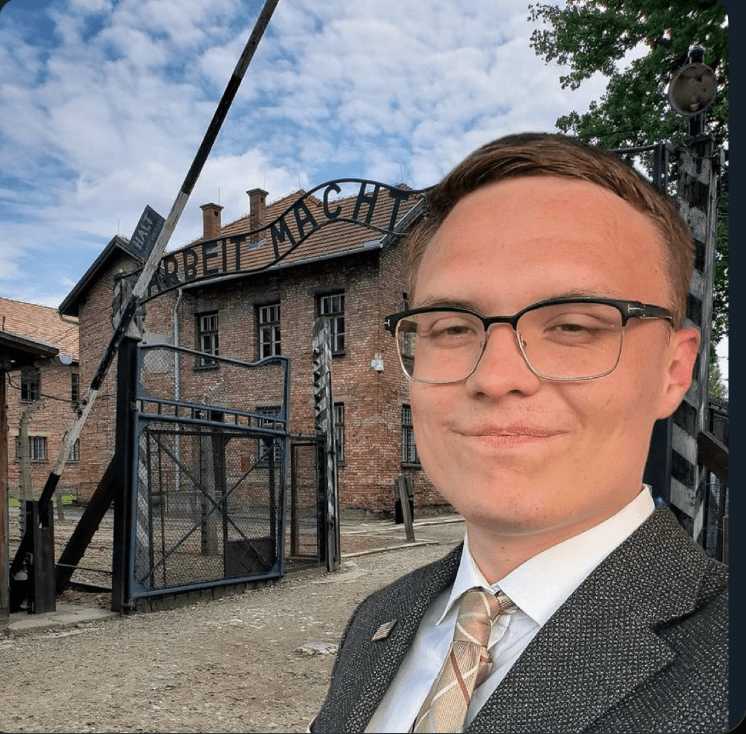
Ted Kempinski Honorary Consul of Memory, Auschwitz-Birkenau Memorial and Museum
I am a 27-year history teacher at Haverhill High School in Massachusetts, a doctoral candidate in Holocaust and Genocide Studies at Gratz College — the world’s only PhD program in this field — and the founder of the Auschwitz-Birkenau Education Foundation of America.
I hold the title of Honorary Consul of Memory for the Auschwitz-Birkenau Memorial and Museum. I am the only American educator to hold this designation.
In April 2026, I received a signed letter of endorsement from Wojciech Soczewica, Director General of the Auschwitz-Birkenau Foundation, formally supporting my work and the establishment of the Foundation. The letter states: “He carries the trust and confidence of the Auschwitz-Birkenau Foundation.”
What I have built:
In sixteen months, working without staff or dedicated funding, I integrated the Auschwitz: In Front of Your Eyes live virtual tour into the West Palm Beach School District — the 10th largest school district in the United States — reaching all 25 of its high schools. I secured funding and entered active negotiations to expand this program into Broward County Schools, the 6th largest school district in the United States. I established partnerships with the South Carolina Holocaust Education Committee, bringing Auschwitz-centered education to more than 20 school districts statewide. I initiated and facilitated the formal partnership between Echoes and Reflections and the Auschwitz-Birkenau Foundation, connecting their educational platform to 145,000 teachers nationwide. I am currently piloting the Memory Action Project — an international student leadership program — in partnership with the Peace Center in Rwanda.
In January 2025 I attended the 80th anniversary of the liberation of Auschwitz as the only American teacher invited.
What I am building:
The Auschwitz-Birkenau Education Foundation of America is a nonprofit institution dedicated to bringing Auschwitz-centered Holocaust education to American students, educators, and communities — not as history alone, but as a living call to resist indifference, confront hatred, and uphold democratic values.
The Foundation’s signature global initiative is the Alliance of Memory and Justice — a network of genocide memorial sites from Auschwitz to Rwanda to Hiroshima to Armenia, unified in voice and mission. Its capstone program is the World Youth Summit on Memory and Justice — an annual convening of student leaders from every nation where the Memory Action Project operates.
What I believe:
Memory without action risks becoming ritual. The only way to honor the past is to ensure it never happens again. That requires not just remembrance but mission.
Through Memory, we honor. Through Meaning, we learn. Through Mission, we act.
Where Memory Becomes Mission.